
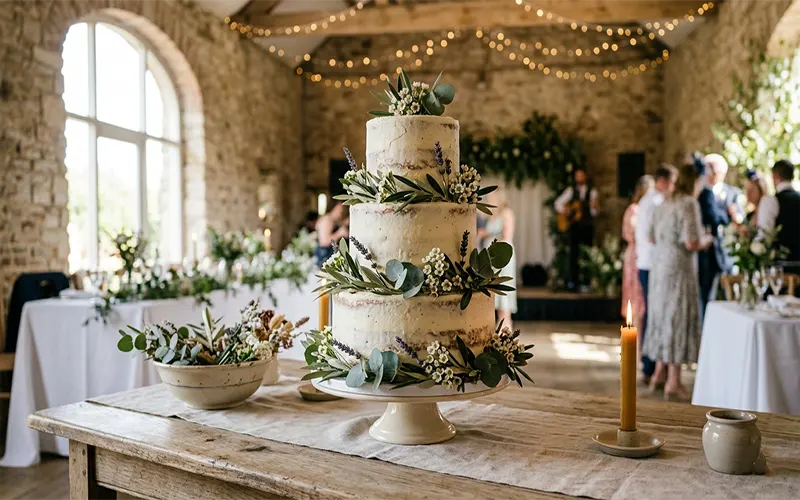
There is a profound, quiet magic in a rustic wedding. It is an aesthetic that rejects the rigid perfection of traditional ballrooms in favor of something more soulful—a celebration that feels rooted in the earth and connected to the passing of the seasons. Whether set in a refurbished barn, a sun-drenched olive grove, or a misty forest clearing, the rustic wedding celebrates the “perfectly imperfect.”
When it comes to the centerpiece of the reception, the cake, this philosophy translates into a move away from stiff gum-paste flowers and intricate piping. Instead, couples are embracing the organic elegance of fresh greenery. Using living botanicals provides a vibrant, textural contrast to the soft sweetness of a cake, creating a “living” piece of art. Greenery is often more impactful than traditional decor because it evokes a sense of effortless beauty, as if the cake was gathered from the very landscape surrounding the ceremony.
The Canvas: Rustic Cake Finishes
Before a single leaf is placed, the “canvas”—the exterior finish of the cake—must set the tone. In rustic design, the goal is to highlight the hand-built nature of the confection.
The Naked Cake
The Naked Cake is the purest form of rustic baking. With zero frosting on the outer sides, the layers of sponge and filling are completely exposed. This look celebrates the golden-brown crumb of the cake and the rich colors of the preserves or creams inside. It is raw, honest, and looks exceptionally beautiful when draped with dark, moody greens like ivy or fern.
The Semi-Naked Cake
The Semi-Naked finish, or the “crumb coat,” involves a thin, translucent layer of buttercream that is scraped back to reveal patches of the cake beneath. It often looks like a light dusting of snow or weathered wood. This finish is the most popular for greenery-focused designs because the white “whisper” of frosting makes the deep greens of eucalyptus or olive leaves pop with crisp clarity.
The Horizontal Stucco
For couples who prefer more frosting, the Horizontal Stucco technique involves applying thick buttercream in intentional, ridged sweeps around the circumference of the cake. This mimics the look of hand-plastered walls or rings on a tree. The deep grooves in the frosting provide the perfect “shelves” to tuck in small sprigs of herbs or delicate vines.
Choosing Your Greenery: Defining the Vibe
Not all greenery is created equal. The foliage you choose will dictate the specific “sub-genre” of your rustic theme.
- Eucalyptus & Olive Sprigs: These are the hallmarks of the Boho-Chic and Mediterranean aesthetics. The silver-blue hue of eucalyptus and the dusty, muted green of olive leaves feel sophisticated and airy. They pair beautifully with white-on-white cakes and outdoor ceremonies.
- Ferns & Moss: For a Woodland or Enchanted Forest wedding, ferns are unmatched. Their delicate, fractal fronds add a sense of movement and mystery. When paired with a darker wood cake stand, they create a moody, organic silhouette.
- Culinary Herbs: If you are hosting a Farm-to-Table dinner, look no further than your garden. Woody herbs like Rosemary, Thyme, and Sage provide not only a stunning textured look but also a divine scent that greets guests as they approach the dessert table.
- Ruscus & Smilax: These are the workhorses of the floral world. They are hardy, deep green, and incredibly flexible, making them ideal for wrapping around tiers or creating long, sweeping trails.
The Art of Placement: Designing with Nature
In rustic design, symmetry is often the enemy of beauty. The goal is to make the greenery look as though it grew onto the cake naturally.
The Cascading Vine
This is a classic technique where greenery starts at the top of the cake and “spills” down the side in an asymmetrical line. By concentrating the foliage on one side and letting it trail off onto the cake stand, you create a sense of flow and height.
The Circular Wreath
For a minimalist approach, consider a “grounded” design. Placing a thick, lush wreath of greenery—perhaps seeded eucalyptus or bay leaves—at the very base of the cake stand creates a pedestal of life. You can then add one small, matching sprig to the top tier to tie the look together.
The Minimalist Topper
Sometimes, a single, perfectly curved branch is all a cake needs. A small “nest” of rosemary or a single hoop of jasmine vine creates a focal point that doesn’t overwhelm the simplicity of the buttercream. Remember: negative space is your friend. Leaving large areas of the cake unadorned allows the eye to appreciate the textures of both the frosting and the leaves.
Safety and Preparation: The Baker’s Responsibility
While using fresh greenery is beautiful, it requires strict attention to food safety. You cannot simply pluck a branch from a tree and stick it into a dessert.
- Toxicity Check: Many popular plants are toxic if ingested. Lily of the Valley, Oleander, and even certain types of Eucalyptus should never have direct contact with the cake. Always consult with a florist to ensure your choices are food-safe.
- Cleaning and Hydration: All greenery must be thoroughly washed and dried to remove any “hitchhiking” insects or dirt. To keep the leaves from wilting, they should be kept in water until the very last moment before the reception begins.
- The Barrier Method: Never insert bare stems directly into the sponge. Use floral tape to wrap the stems, or better yet, use “cake spikes”—small plastic tubes that hold the stem and keep it isolated from the edible portions of the cake. This ensures that the moisture from the plant doesn’t seep into the buttercream and that no sap is transferred to the guests’ slices.
A Living Feast
A simple rustic wedding cake adorned with fresh greenery is more than just a dessert; it is a reflection of a couple’s appreciation for the natural world. It eschews the artificial in favor of the authentic. By pairing the humble textures of a naked or stucco-finished cake with the vibrant life of forest or garden botanicals, you create a memory that is as much about the atmosphere as it is about the flavor. In the end, a touch of green brings a breath of fresh air to the celebration, proving that nature is, and always will be, the ultimate decorator.