Unlocking a Universe of Flavor in High-Temperature Cooking

The Maillard Reaction: Unlocking a Universe of Flavor in High-Temperature Cooking

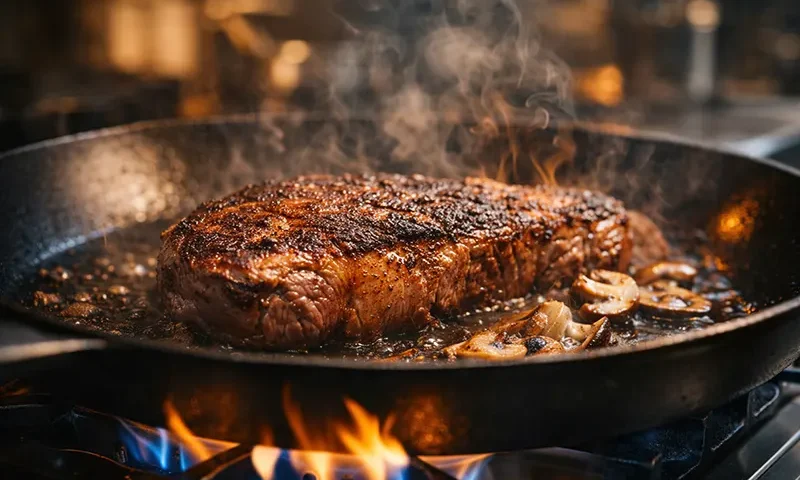
Have you ever wondered what makes a seared steak so savory, a golden-brown piece of toast so comforting, or the crust of freshly baked bread so irresistible? The answer is not just one ingredient but a complex chemical process known as the Maillard reaction. Named after French chemist Louis-Camille Maillard, this reaction is the single most important flavor-generating process in the world of high-temperature cooking. It is a non-enzymatic browning reaction that transforms simple sugars and amino acids into hundreds of new flavor compounds, creating the deep, complex, and savory notes we crave.

The Chemistry of Culinary Magic

The Maillard reaction is a series of intricate chemical events that occur when proteins (specifically, amino acids) and reducing sugars are heated together, typically above 285°F (140°C). Unlike caramelization, which involves only sugars, the Maillard reaction is a more complex interplay between multiple types of molecules. The process begins with a reaction …

View More The Maillard Reaction: Unlocking a Universe of Flavor in High-Temperature Cooking
Beyond the Recipe: The Science Behind Evidence-Based Cooking Techniques

Beyond the Recipe: The Science Behind Evidence-Based Cooking Techniques

For centuries, cooking has been viewed as an art form—a blend of intuition, tradition, and a dash of personal flair. But a growing movement is proving that cooking is also a science, and by understanding the evidence-based principles behind our culinary techniques, we can achieve not only better flavor and texture but also a healthier and more nutritious meal. Evidence-based cooking is a discipline that applies scientific research on food chemistry, nutrition, and food safety to everyday cooking practices. It’s about moving beyond simply following a recipe and understanding the “why” behind what we do.

1. Precision in Cooking: The Key to Nutrient Preservation

Traditional cooking methods, like boiling or deep-frying, can lead to a significant loss of nutrients. Water-soluble vitamins (like Vitamin C and the B vitamins) can leach into boiling water and be poured down the drain. Overcooking vegetables can also destroy heat-sensitive vitamins and antioxidants.

  • Evidence-Based Solution:
View More Beyond the Recipe: The Science Behind Evidence-Based Cooking Techniques
From Liquid to Sphere: The Art and Science of Spherification

From Liquid to Sphere: The Art and Science of Spherification

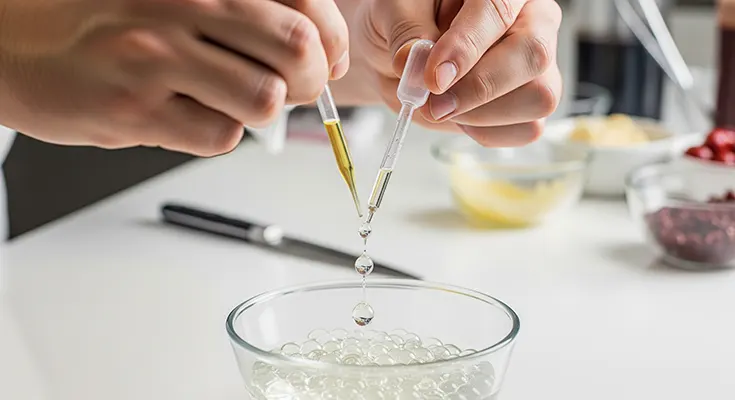
Spherification is arguably the most iconic and visually stunning technique to emerge from the world of molecular gastronomy. It is a process that transforms a liquid into a sphere that bursts in the mouth, releasing a concentrated burst of flavor. While the result may seem like a magical feat of culinary alchemy, the science behind it is an elegant and accessible chemical reaction between two key ingredients: sodium alginate and a calcium solution.

The Core Ingredients: Sodium Alginate and Calcium

The heart of spherification lies in the interaction between a hydrocolloid and a mineral.

  • Sodium Alginate: This is a natural polysaccharide extracted from brown algae. When dispersed and hydrated in a liquid, it forms a viscous solution.
  • Calcium Ions: Calcium is a mineral essential for this reaction. Common sources of calcium in spherification are calcium lactate, calcium chloride, or calcium gluconate.

The fundamental principle is that when a solution containing …

View More From Liquid to Sphere: The Art and Science of Spherification
From Clinic to Kitchen: The Principles of a Culinary Medicine Program

From Clinic to Kitchen: The Principles of a Culinary Medicine Program

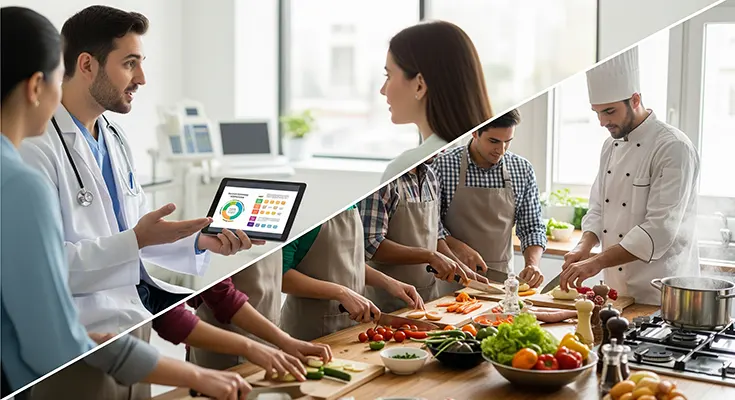
Culinary medicine is an emerging, evidence-based field that bridges the gap between conventional medical advice and the practical realities of eating. It goes beyond simply telling a patient what to eat, instead providing them with the knowledge and skills to make informed, sustainable food choices that can prevent, manage, and even reverse chronic diseases. For healthcare clinics, establishing a culinary medicine program is a powerful way to empower patients and improve health outcomes. While the specific blueprint for such a program will vary, its core principles and components remain consistent.

The Foundational Concept: Blending Art and Science

At its heart, culinary medicine is about translating the science of nutrition into the art of cooking. Instead of a sterile lecture on macronutrients, a program might involve a hands-on cooking class where a physician and a chef demonstrate how to prepare a delicious, heart-healthy meal. The goal is to move beyond abstract …

View More From Clinic to Kitchen: The Principles of a Culinary Medicine Program
From Grain to Crunch: How Food Extrusion Technology Shapes the Texture of Snack Foods

From Grain to Crunch: How Food Extrusion Technology Shapes the Texture of Snack Foods

Take a moment to consider the satisfying crunch of a puffed cheese curl, the airy crispness of a breakfast cereal, or the uniform shape of a granola bar. These familiar textures are not the result of simple baking or frying; they are the result of a sophisticated and versatile process known as food extrusion. This technology has become the cornerstone of modern snack food production, transforming basic ingredients into a vast array of shapes, sizes, and, most importantly, textures.

The Science of Extrusion: A High-Pressure Transformation

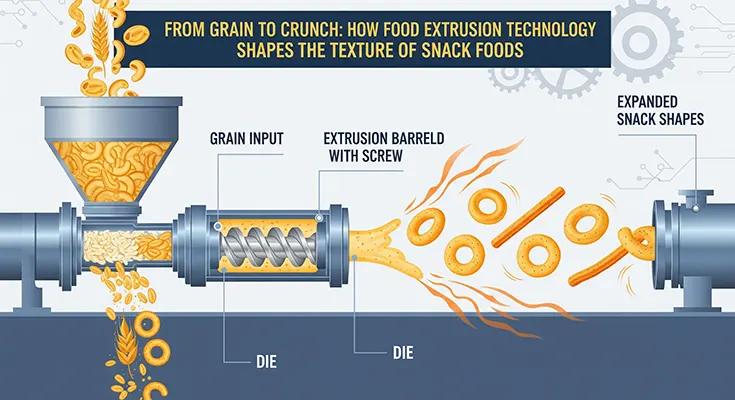
Food extrusion is a process where a mixed ingredient system—typically a dough or paste—is forced through a die, which is a small opening or mold, under a combination of high heat, pressure, and shear. The process takes place within a machine called an extruder, which consists of a long barrel with a rotating screw. As the screw turns, it continuously mixes, heats, and kneads …

View More From Grain to Crunch: How Food Extrusion Technology Shapes the Texture of Snack Foods