
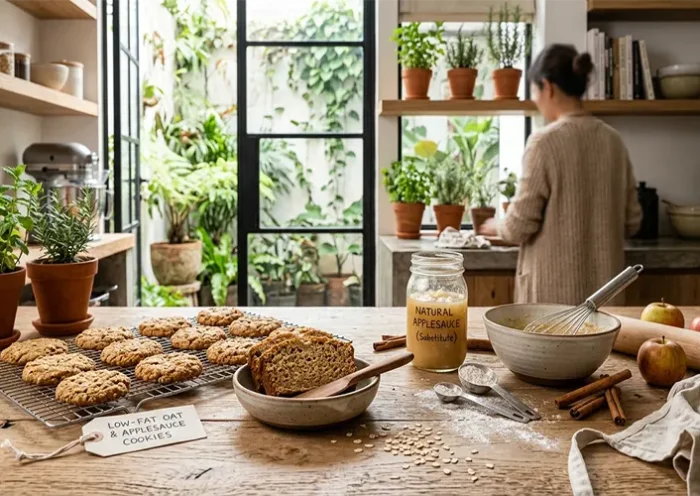
Low-Fat Baked Goods and Cookies Using Applesauce Substitute
In the traditional world of pastry, fat is the architect of indulgence. Whether it is butter, oil, or shortening, fat serves several critical roles: it provides Aeration during the creaming process, ensures tenderness by shortening gluten strands, and carries flavor across the palate. However, as we move toward a more health-conscious culinary landscape, many bakers are looking for ways to reduce saturated fats without sacrificing the ritual of a warm cookie or a moist slice of cake. Enter the humble applesauce. For decades, applesauce has been the “secret weapon” of the low-fat baker. As a 1:1 substitute for fats, it offers a way to slash calories and cholesterol while maintaining a surprising level of quality. But applesauce baking is not as simple as a direct swap; it is a science of moisture management. To be successful, you must understand how this fruit purée interacts with flour, sugar, and heat to …


 Combine fruit, butter, sugar, 3/4 cup of the sherry (or the brandy essence mixture) and the water in a substantial saucepan stir over medium heat till butter is melted and sugar dissolved. A adequately made, old-fashioned fruitcake need to hold for two or three months, and that is not even counting freezing. I do appreciate a very good homemade fruitcake and miss the ones that my grandmother applied to make. When baking the cake add a tin with about two pints (1 litre) of water in it, at the bottom of the oven. The dark fruit cake includes prunes, dates, cherries, walnuts, brown sugar and molasses.

 Chinese New Year is celebrated globally, with numerous people appreciating its significance and recognising traditions and customs connected to the festivities, such as the thousands of red lanterns, fiery dragon dances and iconic animal zodiac indicators. Ahead of being aware of how the festival is celebrated in Singapore, it is often good to read up on the Chinese mooncake festival legend to uncover out the story of Chang Er, Wu Kang (the man that chops the tree on the moon), Jade Rabbit and mooncake which are linked with this festival in order to appreciate the celebration. In the Tang Dynasty, bakers and sweet shops specialized in moon cakes appeared in the capital city of Chang’an.