
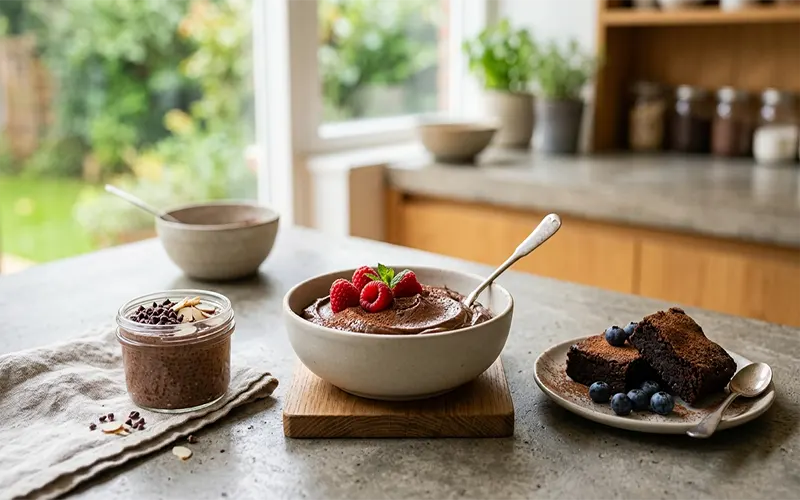
For decades, the narrative surrounding weight loss has been one of extreme deprivation. We have been taught that to reach our health goals, we must categorize foods into “good” and “bad,” with chocolate almost always topping the list of forbidden items. This “scarcity mindset” is precisely why many traditional diets fail. When we totally deprive ourselves of the flavors we love, we trigger a psychological response that often leads to overindulging later.
The secret to sustainable weight loss isn’t the elimination of chocolate—it is the mastery of Satiety over Scarcity. By understanding the science of ingredients, we can enjoy deep, rich chocolate flavors in a way that aligns with a calorie deficit. When we stop viewing chocolate as a “cheat” and start viewing it as a manageable part of a balanced, high-volume diet, we remove its power over us. In this guide, we will explore how to leverage food science to create indulgent, low-fat chocolate treats that satisfy your cravings while supporting your journey toward a healthier you.
The Science of Low-Fat Chocolate: Flavor vs. Fat
To create healthy chocolate desserts, we must first understand what chocolate actually is. A standard chocolate bar is a combination of cocoa solids (where the flavor, antioxidants, and caffeine live) and cocoa butter (the fat). While cocoa butter provides that iconic melt-on-the-tongue texture, it is also incredibly calorie-dense, containing roughly 9 calories per gram.
When our goal is weight loss, we want to maximize the cocoa solids while minimizing the cocoa butter. This is why unsweetened cocoa powder is a dietitian’s best friend. By using a high-quality, Dutch-processed cocoa powder, you can achieve an intense, “dark” chocolate flavor without the high fat content of a solid bar. This allows us to control the fats and sweeteners we add, resulting in a dessert that provides the same sensory satisfaction for a fraction of the caloric cost.
The Secret “Volume” Ingredients: Bulking Without the Calories
In the world of weight loss, Volume Eating is king. The goal is to eat a large physical quantity of food for a low number of calories, which signals to the stretch receptors in your stomach that you are full. In chocolate desserts, we can achieve this using “secret” ingredients that provide moisture and bulk without the need for butter or oil.
- Pumpkin Purée & Unsweetened Applesauce: These are the ultimate fat-replacers for brownies and cakes. They provide a dense, fudgy moisture and natural sweetness. Because chocolate is such a dominant flavor, you won’t taste the pumpkin or apple at all.
- Egg Whites & Aquafaba: If you crave an airy, light texture, whipped egg whites or aquafaba (chickpea brine) provide massive volume. When beaten into stiff peaks, these proteins trap air, creating mousses and soufflés that feel substantial but are mostly “fluff.”
- Non-Fat Greek Yogurt: This is the gold standard for creamy chocolate desserts. It provides a thick, velvety “mouthfeel” similar to heavy cream, but with the added benefit of high protein, which increases satiety (the feeling of being full for longer).
High-Volume Chocolate Recipes
These recipes are designed to be large in portion but low in fat and calories, ensuring you never feel like you’re “on a diet.”
1. The 100-Calorie Fudgy “Secret Ingredient” Brownies
These brownies are impossibly moist and rich, yet they contain significantly less fat than a traditional box mix.
- Ingredients: 1 cup pumpkin purée, 1/2 cup unsweetened cocoa powder, 1/2 cup oat flour, 1/2 cup zero-calorie sweetener (like erythritol or monk fruit), 1 tsp vanilla extract, 1/4 tsp baking soda.
- Instructions:
- Preheat oven to 350°F (175°C) and line an 8×8 pan with parchment paper.
- In a large bowl, whisk together the pumpkin, vanilla, and sweetener.
- Sift in the cocoa powder, oat flour, and baking soda. Stir until a thick, dark batter forms.
- Spread the batter into the pan and bake for 20–25 minutes.
- Crucial Step: Let them cool completely before slicing. The texture sets as they cool, resulting in a perfect fudge-like bite.
2. Whipped Chocolate “Cloud” Mousse
This dessert is high in protein and extremely low in fat, making it a perfect late-night snack.
- Ingredients: 1 cup non-fat Greek yogurt, 2 tbsp unsweetened cocoa powder, 2 tbsp monk fruit sweetener, a pinch of sea salt, 1/4 cup whipped egg whites (or store-bought fat-free whipped topping).
- Instructions:
- In a small bowl, vigorously whisk the yogurt, cocoa powder, and sweetener until smooth and no lumps remain.
- Gently fold in the whipped egg whites or topping. Do not stir aggressively, as you want to keep the air bubbles intact.
- Chill for 15 minutes and serve. The result is a light, pillowy mousse that feels incredibly indulgent.
3. Chocolate-Drizzled PB2 Frozen Bark
Powdered peanut butter (PB2) has 85% less fat than traditional peanut butter, making it a staple for chocolate lovers.
- Ingredients: 2 cups non-fat Greek yogurt, 1/4 cup PB2 (powdered peanut butter), 1 tbsp cocoa powder, 1 tbsp honey or maple syrup.
- Instructions:
- Spread the yogurt onto a baking sheet lined with parchment paper in a thin, even layer.
- In a separate small bowl, mix the PB2 and cocoa powder with a tablespoon of water until it reaches a “drizzle” consistency.
- Swirl the chocolate-peanut butter mixture into the yogurt using a toothpick.
- Freeze for 2–3 hours until solid. Break into shards and keep in the freezer for a cold, crunchy treat.
Mindful Indulgence: The Psychology of the Sweet Tooth
While the nutritional profile of your dessert matters, how you eat it is equally important for weight loss. Research suggests that the “first bite” and “last bite” provide the most psychological satisfaction. To maximize this, practice mindful eating.
Sit down without distractions, use a small dessert plate to make the portion look larger, and use a small spoon. By slowing down and truly tasting the bittersweet notes of the cocoa and the creamy texture of the yogurt, you allow your brain’s reward center to register the treat. This prevents the “mindless eating” that often leads to consuming more calories than intended.
Consistency Over Perfection
Weight loss is not a sprint of perfection; it is a marathon of consistency. Including healthy, low-fat chocolate desserts in your routine is a strategic move that prevents the feelings of deprivation that derail so many health journeys. By utilizing the science of cocoa powder and high-volume ingredients like Greek yogurt and pumpkin, you can satisfy your cravings every single day. Remember, the best diet is the one you can actually stick to—and a diet that includes chocolate is a diet built to last.