
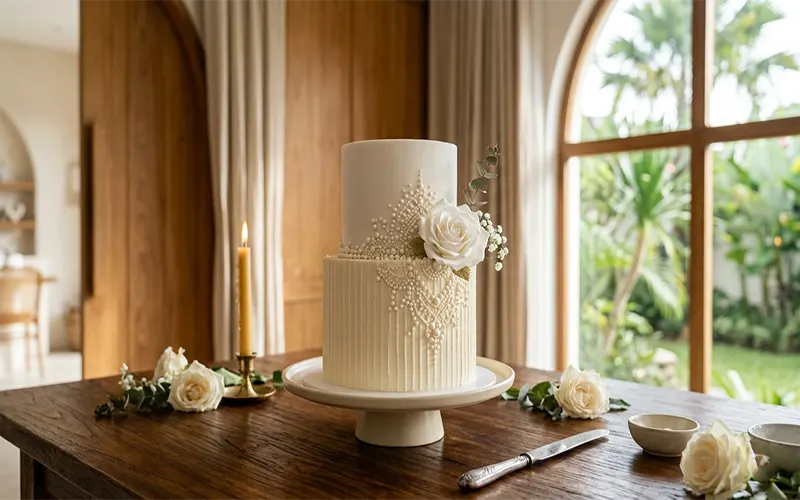
In recent years, the wedding industry has undergone a significant transformation. The era of the “Grand Ballroom” gala with hundreds of guests has given way to the rise of the Micro-Wedding and the “Intimate Soirée.” This shift toward smaller guest lists (typically ranging from 20 to 50 people) has redefined the centerpiece of the reception: the cake. Modern couples are increasingly rejecting the sprawling five-tier confections of the past in favor of the Two-Tier Wedding Cake.
The beauty of a two-tier design lies in its perfect balance of tradition and intentionality. It provides that classic, tiered silhouette that signals a “wedding,” yet it eliminates the excess and waste associated with massive cakes. A smaller cake is not a compromise; it is an opportunity to prioritize high-level artistry, premium ingredients, and a “clean” modern aesthetic that feels curated rather than manufactured.
The Power of Proportion: Tall and Slim vs. Wide and Short
When designing a small cake, proportion is your most powerful tool. A standard two-tier cake (usually a 6-inch tier atop an 8-inch tier) can sometimes look “squat” if the tiers are too short. Modern designers have solved this by playing with height.
The “Tall and Slim” Silhouette
One of the most popular modern trends is the Extra-Tall Bottom Tier. By using tiers that are 5 or 6 inches high (composed of four or five layers of cake rather than the standard three), you give a small cake a monumental, high-fashion feel. A 4-inch tier stacked on a 6-inch tall tier creates a sleek, vertical line that looks incredibly sophisticated and “stretches” the visual impact of the cake without needing a larger footprint.
The Balanced Wide Tier
Conversely, a “Wide and Short” proportion—such as an 8-inch tier topped with a 4-inch tier—creates a more stable, grounded appearance. This look works beautifully for rustic or “Home-Style” weddings, where the focus is on a generous, approachable aesthetic.
Minimalist Design Archetypes
To keep a two-tier cake looking modern, the decoration must be purposeful. In minimalist design, every element has a reason for being there.
The Monochromatic Texture
In 2026, we are seeing a move toward cakes that use texture instead of color to create interest. Imagine an all-white cake where the bottom tier features a “Stone-Washed” Buttercream finish—rough, tactile, and organic—while the top tier is perfectly smooth. Or, consider Deckled Edges, where the top of each tier features a jagged, torn-paper effect. This style is serene, architectural, and pairs perfectly with high-end gallery or industrial loft venues.
The Single-Stem Statement
Modernism often thrives on a single focal point. Instead of a cascade of roses, choose one oversized, architectural flower. A single, king Protea, a large Magnolia, or even a cluster of structured succulents placed asymmetrically on the top tier creates a bold “Art Gallery” vibe. When paired with a flawless Silk-Finish Ganache or smooth fondant, this single element does more work than a hundred smaller flowers ever could.
The Floating Tier
For couples who want a “futuristic” or high-concept look, the Floating Tier is the ultimate design choice. By using a clear acrylic spacer or a hidden internal stand between the top and bottom tiers, you create “air” in the middle of the cake. This space can be left empty for a minimalist look or filled with a single, lush bed of baby’s breath or fairy lights. It transforms a simple cake into a levitating piece of installation art.
Modern Color Palettes: Beyond the White Cake
While white will always be a staple, modern couples are increasingly embracing sophisticated, muted palettes that reflect their personal style and home decor.
- Sage & Gold: A soft, dusty green buttercream paired with a single, hand-painted gold leaf stroke across the base. It feels organic, calming, and deeply connected to nature.
- Dusty Terracotta: Perfect for autumn or desert-themed weddings, this warm, earthy orange is often paired with “nude” tones. It looks exceptional when finished with a matte texture.
- Moody Charcoal: For the bold, “black-tie” urban wedding, a charcoal grey or even a matte black two-tier cake makes an unforgettable statement. When accented with silver leaf or white pearls, it becomes the epitome of urban luxury.
Flavors for the Modern Palate
With a smaller guest list, you can afford to move away from “crowd-pleaser” flavors like plain vanilla or chocolate and experiment with Complex Pairings that reflect a more discerning, adult palate. Smaller cakes allow for higher-quality, artisanal ingredients that would be cost-prohibitive for 200 people.
- Earl Grey & Lavender: A floral, fragrant tea-infused sponge with a light lavender honey cream.
- Salted Caramel & Rosemary: A savory-sweet combination that uses fresh herbs to cut through the richness of the caramel.
- Passionfruit & Pink Peppercorn: For a tangy, zesty finish that surprises the tongue with a subtle, spicy heat.
The transition toward small, two-tier wedding cakes is a celebration of quality over quantity. For the modern couple, the cake is no longer just a dessert; it is a carefully considered piece of the wedding’s overall design language. By focusing on tall proportions, unique textures like the “floating tier,” and sophisticated flavor profiles, a small cake can leave a far more lasting impression than a massive, generic one. In the world of modern weddings, a two-tier cake proves that true elegance is found in the edit—prioritizing artistry, intimacy, and the beauty of the “simple” done perfectly.