Beyond the Plate: Molecular Gastronomy's Role in Plant-Based Foams and Gels

Beyond the Plate: Molecular Gastronomy’s Role in Plant-Based Foams and Gels

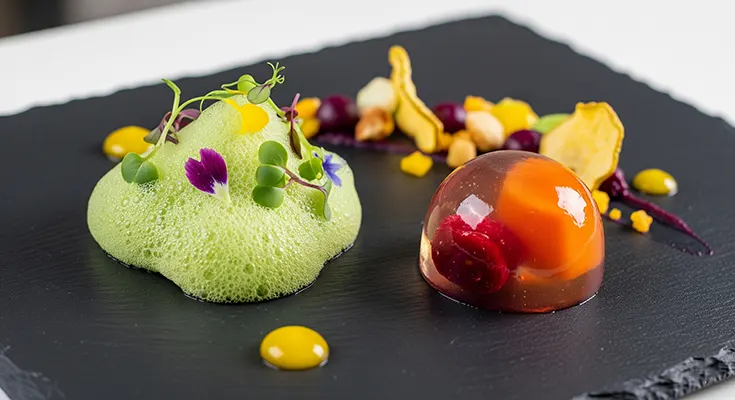
Molecular gastronomy, a discipline that explores the physics and chemistry of cooking, has long been associated with avant-garde cuisine and elaborate presentations. While often linked to high-end, meat-centric dishes, its principles and techniques are proving to be invaluable in the burgeoning world of plant-based culinary innovation. Specifically, molecular gastronomy offers a scientific toolkit for creating a diverse array of plant-based foams and gels, adding exciting textures, flavors, and visual appeal to vegan and vegetarian dishes.

The Appeal of Foams and Gels in Plant-Based Cuisine

Foams and gels aren’t just about aesthetics; they offer significant culinary advantages.

  • Texture Contrast: They introduce lightness, airiness, and sometimes a satisfying chew or melt-in-the-mouth sensation that can elevate the humble vegetable.
  • Flavor Delivery: Foams, in particular, are excellent carriers of aroma, as the air bubbles burst on the palate, releasing concentrated flavor. Gels can encapsulate and deliver bursts of flavor.
  • Visual Interest: They transform the
View More Beyond the Plate: Molecular Gastronomy’s Role in Plant-Based Foams and Gels
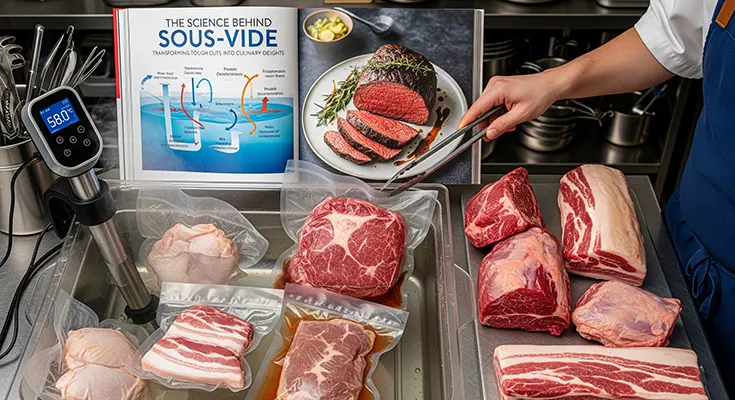
The Science Behind Sous-Vide: Transforming Tough Cuts into Culinary Delights

The Science Behind Sous-Vide: Transforming Tough Cuts into Culinary Delights

Sous-vide, a French term meaning “under vacuum,” is a cooking method that has revolutionized the culinary world, particularly when it comes to preparing meat. By cooking food in a precisely controlled water bath, chefs and home cooks alike can achieve unparalleled tenderness, moisture retention, and consistent results. While it might seem like a modern marvel, the science behind sous-vide’s ability to transform even the toughest cuts of meat into succulent masterpieces is rooted in fundamental principles of protein denaturation and enzymatic activity.

Precision Temperature Control: The Heart of Sous-Vide

The core of sous-vide cooking lies in its ability to maintain an exact cooking temperature for an extended period. Unlike traditional methods like grilling, roasting, or pan-frying, where external heat can easily overcook the outer layers while the interior struggles to reach the desired doneness, sous-vide ensures uniform cooking from edge to edge.

Meat is typically sealed in a vacuum-sealed bag …

View More The Science Behind Sous-Vide: Transforming Tough Cuts into Culinary Delights
The Gut-Friendly Revolution: How Fermentation Boosts Gut Health and Nutrient Bioavailability

The Gut-Friendly Revolution: How Fermentation Boosts Gut Health and Nutrient Bioavailability

For centuries, fermentation has been a cornerstone of global food traditions, a simple yet transformative process used to preserve food and create unique flavors. From the tangy crunch of sauerkraut to the creamy texture of yogurt, these foods have long been a part of human diets. In recent years, however, a new appreciation for fermented foods has emerged, driven by a growing body of scientific evidence that highlights their profound impact on gut health and nutrient bioavailability.

The Fermentation Process: A Microbial Masterclass

Fermentation is a biochemical process where microorganisms like bacteria and yeast break down carbohydrates into simpler compounds such as organic acids and alcohol. This process not only acts as a natural preservative but also fundamentally alters the food’s composition, creating a new food matrix with unique properties. Lactic acid fermentation, for example, is common in products like kimchi, yogurt, and sourdough bread, where lactic acid bacteria (LAB) …

View More The Gut-Friendly Revolution: How Fermentation Boosts Gut Health and Nutrient Bioavailability
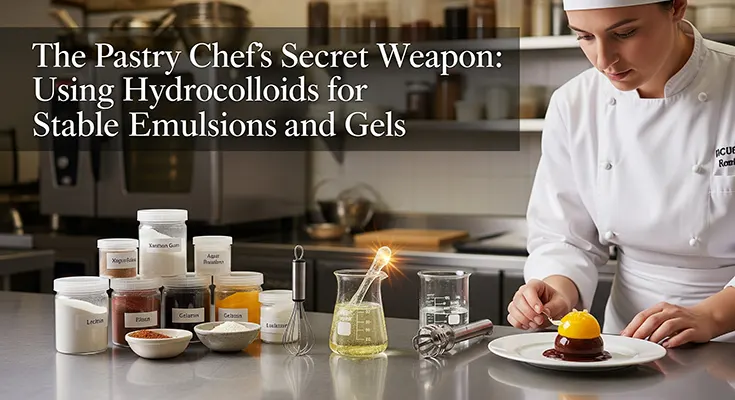
The Pastry Chef's Secret Weapon: Using Hydrocolloids for Stable Emulsions and Gels

The Pastry Chef’s Secret Weapon: Using Hydrocolloids for Stable Emulsions and Gels

The art of pastry relies on a delicate balance of science and creativity. While traditional techniques have long dominated the kitchen, the integration of hydrocolloids—long-chain polymers that thicken and gel when dispersed in water—has given modern pastry chefs unprecedented control over texture, stability, and shelf life. These “water-loving” compounds are the secret behind stable fillings, flawless glazes, and ethereal foams, providing a powerful toolkit for creating a new generation of delicious and visually stunning desserts.

What Are Hydrocolloids?

At their core, hydrocolloids are a diverse group of natural substances—from plant-based gums and seaweeds to microbial products—that have a remarkable ability to bind water molecules. By doing so, they can create viscous liquids (thickeners) or rigid, three-dimensional networks (gelling agents). In the context of pastries, this allows for the precise manipulation of a dish’s rheology, from preventing a sauce from separating to ensuring a filling remains stable during baking or freezing.…

View More The Pastry Chef’s Secret Weapon: Using Hydrocolloids for Stable Emulsions and Gels
Culinary Tourism with Exploring the World Through Food

Culinary Tourism with Exploring the World Through Food

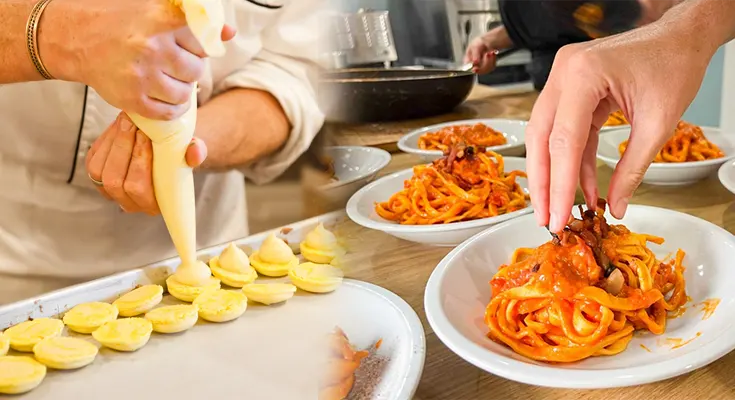
Culinary tourism has become one of the most exciting ways to explore new destinations. Instead of just visiting a place for its sights or culture, culinary tourism allows travelers to immerse themselves in the flavors, aromas, and unique food traditions of a region. From street food stalls to Michelin-starred restaurants, food lovers around the globe are discovering how the local cuisine can enhance their travel experience. In this article, we will explore some of the best culinary tourism destinations where food takes center stage.

Why Culinary Tourism?

Culinary tourism isn’t just about eating—it’s about learning and experiencing the food culture of a destination. It involves more than just sampling dishes; it’s about understanding the history behind the food, meeting local chefs and food producers, and even participating in cooking classes or food tours. Whether it’s savoring a traditional dish, tasting local wines, or discovering the secrets behind a famous recipe, …

View More Culinary Tourism with Exploring the World Through Food